








Pull-ups are one of the most effective exercises for upper-body strength. They train back, arms, shoulders and core in one movement, and they require no weights. But they are also one of the exercises few can do the first time they hang from a bar. That is not a problem. It is the starting point.
Most adults cannot do a full pull-up without training. This applies regardless of age, gender or experience. The difference between those who can and those who cannot is not talent. It is a progression that can be trained systematically, and that most can complete within a few months with the right approach.
This guide is about that path. From hanging on a pull-up bar to pulling yourself up with control.
Which muscles do pull-ups train
Pull-ups are primarily a back exercise. The large back muscle, latissimus dorsi, does the majority of the work, together with the biceps, rear delts and the deep core muscles that stabilize the body during the movement.
But the grip type changes the distribution. There are three grips you should know.
Overhand grip is the classic pull-up grip, where the palms face away from you. It is the hardest of the three and places the most load on the back and forearms.
Underhand grip is chin-ups, where the palms face you. The narrower grip activates the biceps more and is for most easier than the overhand grip. Chin-ups are not a "lighter version" of pull-ups. It is a distinct exercise with a different muscle focus, and it is a legitimate starting point if you cannot yet do a full pull-up with an overhand grip.
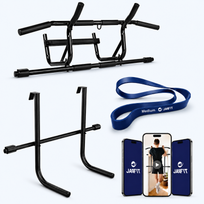
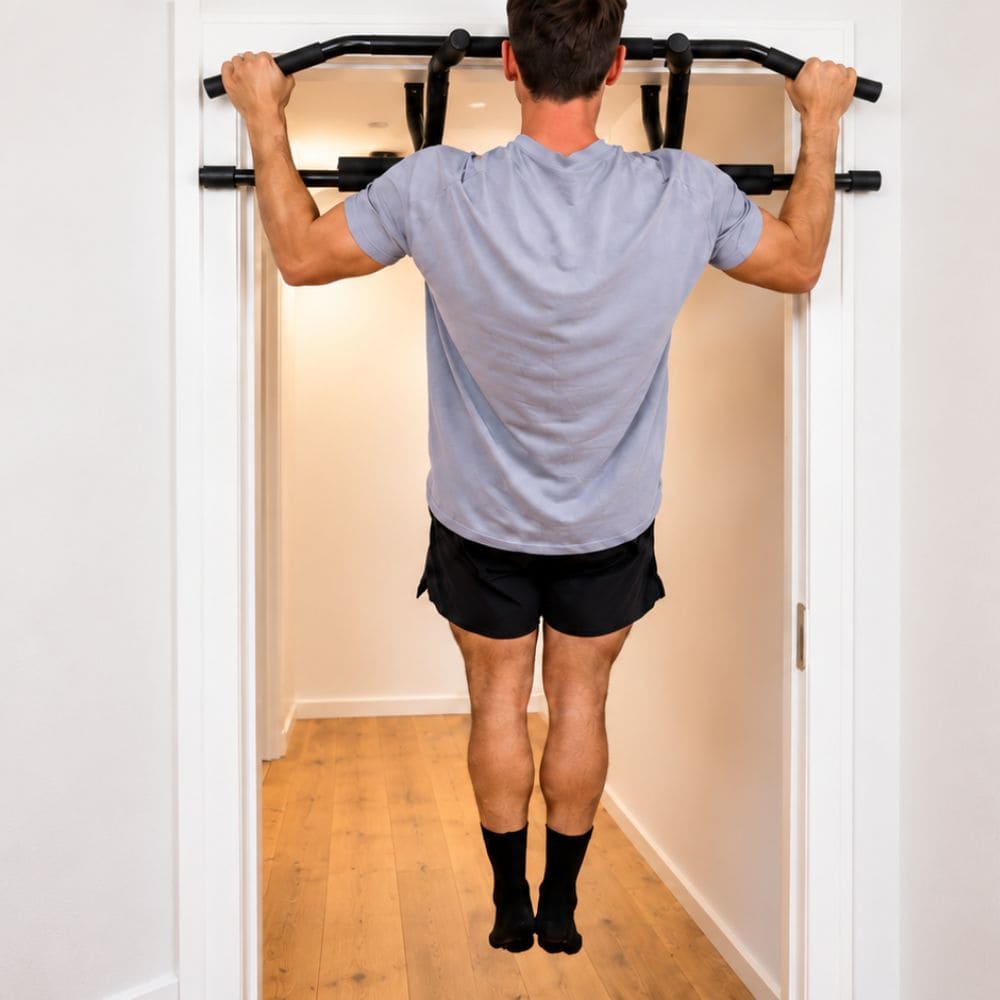
Neutral grip is where the palms face each other. It is the most shoulder-friendly variant and a good middle ground between the other two. JAAFITs pull-up bar has all three grip positions.
From zero to your first pull-up
There is a logical sequence, and it does not start with attempting a pull-up.
Dead hang. Hang from the bar with straight arms for as long as you can. It sounds simple, but it builds the grip strength and shoulder stability you need before you even begin pulling. Start with 10–15 seconds and build up. When you can hang for 30–45 seconds, your grip is ready.
Scapula pull-ups. Hang from the bar and pull the shoulder blades down and together without bending the arms. It is a small movement, but it activates exactly the back muscles that initiate a pull-up. It is the exercise that teaches your body to recruit the right muscles, instead of letting the arms do all the work.
Australian pull-ups. Set a bar low, or use a table edge, and pull yourself up from an angled position with your feet on the floor. It is a horizontal row, and it builds the upper-body strength you lack, with a fraction of the load a full pull-up requires. Gradually increase the angle until you are close to vertical.
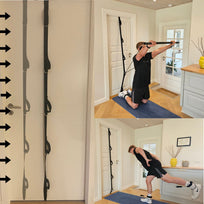
Assisted pull-ups with a band. Here you use a PowerBand to take some of your bodyweight. Wrap the band around the pull-up bar, place your foot or knee in the loop and perform the pull-up motion with the assistance the band provides. Start with a heavy band and switch to lighter ones as strength grows. This is the step that takes you from "I can almost" to "I can".
Negative pull-ups. Jump or use a stool to get into the top position, and lower yourself slowly. As slowly as you can. The eccentric phase (the lowering) is where the muscles work hardest, and it is one of the most effective methods to build the strength missing for the concentric part (the pull).
The sequence is not accidental. Each step builds the specific strength the next requires. Most who follow it systematically can do their first clean pull-up within 4–8 weeks, depending on the starting point.
After your first
Three clean pull-ups is a turning point. From here it’s about volume and variation.
Increase repetitions gradually. Add sets before you add repetitions per set. When you can do 3 sets of 8–10 reps, it’s time to vary. Switch between grip types from session to session. Overhand for back width, underhand for biceps, neutral for shoulder-friendly load. Wide grip, close grip and mixed grip add further variation.
For those who want structure from the start, JAAFIT Træningsappen has a dedicated pull-up program, JAAFIT Rejsen, that takes you from beginner to intermediate to expert with video guides for each exercise. The app also contains separate instructional videos for pull-ups in four variants, chin-ups, dead hangs, knee raises and dips.
Pull-ups and chin-ups are bodyweight exercises, but they are still real strength training. The progression follows the same principles as all other muscle building. Sufficient load, increased volume over time and recovery in between. If you want to learn more about how to build muscle without a gym, we have written about exactly that.


Leave a comment
This site is protected by hCaptcha and the hCaptcha Privacy Policy and Terms of Service apply.