









To get results from strength training, your diet must provide enough protein for your body to actually have something to build with.
You can train several times a week, follow a program and still stay in the same place. It often feels like the training isn’t working, but in practice the problem is rarely there. What’s often missing isn’t effort but building material. Most people don’t get too little training, they get too little protein.
The short answer about your protein needs
Most people who do strength training benefit from about 1.6–2.2 grams of protein per kg of body weight daily. That is the level where the body has enough to both repair and build muscle after training, provided the rest of your training is also in order.
To make it concrete, a person weighing 70 kg will typically benefit from about 110–150 grams of protein per day. That may sound like a lot, but spread over several meals it is realistic for most people through ordinary food. The most important thing is not whether you hit a perfect number every day, but whether you consistently stay high enough for the body to have something to work with. Most people underestimate how much protein they actually need, and that is often where things start to go wrong.
This is where it goes wrong
When people don’t get results from their training, it is rarely because they train incorrectly. Far more often it’s because the body isn’t getting what it needs to respond to the training.
Many eat “normally” and don’t think further about it. Meals may look fine, and nothing feels entirely wrong. But when you add it all up over a day, protein intake is often too low to support muscle growth. This is also where many get caught in a misconception. They try to optimize their training with more exercises, higher intensity or better programs, but the body still lacks the material it needs to build with.
It’s not that you’re not training hard enough. It’s because the body lacks materials to respond to the work you’re doing.
What protein does
When you strength-train, you subject your muscles to load. That creates small damages in the muscle fibers that the body subsequently repairs. It is in that process that the muscles become stronger and more resilient.
Protein is what the body uses as building material in that repair. Without enough protein the body will still try to repair what you stressed, but the result will be limited. You won’t get the same adaptation, and over time that means your progress slows or stops entirely.
That’s also why you can feel like you train hard without getting stronger — training without protein is just repetitions without development.
Should you eat protein before or after training?
The short answer is that the most important thing is not when you eat protein, but how much you get throughout the day.
There is often a lot of focus on whether to eat protein before or after training, and yes it can make sense to get protein around training because the body is busy repairing and adapting. But it doesn’t change the most important thing. If your total protein intake is too low, timing makes no real difference.
Timing only matters once you get the basics right.
For most people it will therefore be more effective to focus on an even distribution of protein throughout the day than to hit a specific time precisely. Once that is in place, timing can be an extra layer, but not what determines whether you get results. If you want to get more specific about what makes sense to eat after training, you can read our review of what to eat after training.
If you want the full overview of how protein, energy and meals fit together in practice, you can read more in our article on diet and nutrition for strength training.
How to get enough protein in practice?
In practice it’s rarely about finding special foods or making a perfect meal plan. It’s about getting enough protein as a natural part of your meals throughout the day.
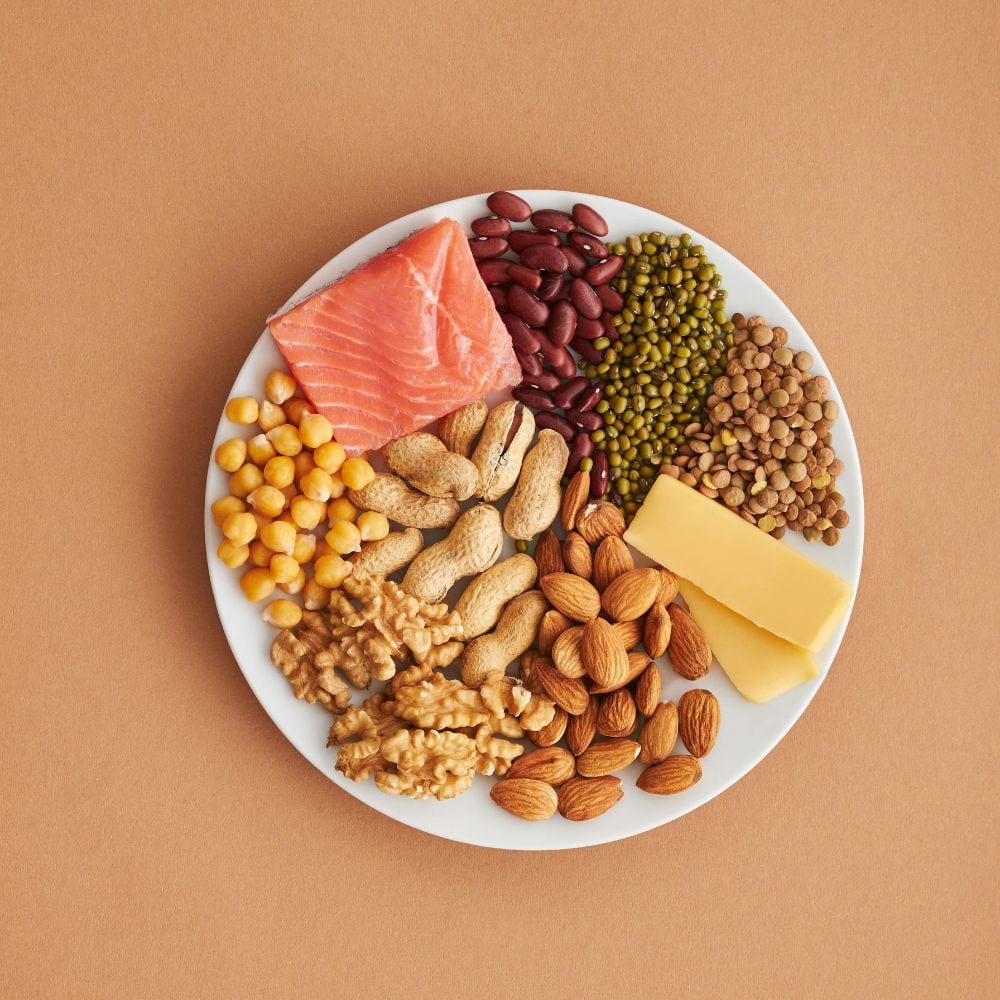
For many it can be as simple as starting the day with a meal that actually contains protein, like skyr, eggs or similar, instead of only quick carbohydrates. For lunch and dinner it makes sense to think in terms of a clear protein source — chicken, fish, eggs, legumes or similar — rather than leaving it to chance what ends up on the plate.
It sounds simple, but this is precisely where it often slips. Not because people don’t know what they should eat, but because it’s not done consistently in a busy everyday life.
If you already have your training under control but lack a way to make your diet work in practice, it can make sense to work with a fixed structure. In the JAAFIT training app you will find, among other things, a complete meal plan with concrete meals and recipes that make it easier to get enough protein without having to think about it all the time.
Typical mistakes that hold back your protein intake
Most people don’t get too little protein because they don’t know it’s important. They get too little because it isn’t done consistently in practice.
A classic mistake is simply getting too little over the day. Meals may look fine individually, but overall protein intake ends up too low to support muscle growth. This is especially typical if you just eat “normally” without focusing on what the meals actually contain.
Another misconception is that protein is mainly about shakes. Protein powder can be a practical supplement, but it doesn’t change that most protein should still come from ordinary food. If that’s not in place, a scoop of protein powder won’t solve the problem.
Furthermore, regularity plays a bigger role than many think. If you skip meals or eat very differently from day to day, it becomes difficult to hit a stable level where the body consistently has what it needs.
How does this relate to muscle growth?
Protein is a prerequisite for muscle growth, but it’s not what initiates the process. Load does.
When you strength-train, you give the body a reason to adapt. When you eat enough protein, you give it the ability to do so. Both are necessary, and one cannot compensate for the other.
If you want to understand how training itself drives development and what it takes to stimulate muscle growth, you can dive into our review of how to build muscle mass. If you’re also unsure how your calorie intake affects your ability to build muscle mass, you can read our article on whether it’s possible to build muscle in a calorie deficit.
When it has to work in practice
It is rarely lack of knowledge that is the problem. Most people know that protein is important and have an idea of what they should eat. The problem is that it isn’t done consistently enough over time.
This is where structure becomes more important than intention. It’s not about being perfect every day, but about having a framework that makes it easy to get enough protein without having to think about it all the time.
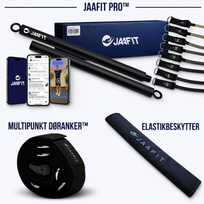
If you already have your training under control but lack a way to make your diet fit into everyday life, it can make sense to work with a fixed structure. In the JAAFIT training app you will find, among other things, concrete training programs and a complete meal plan that make it easier to get both training and protein intake to work together in practice.
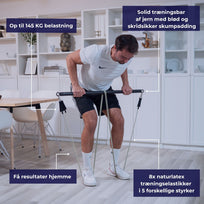
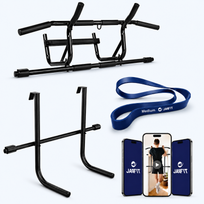
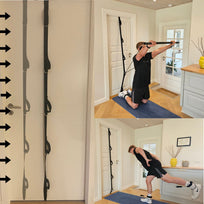
At the same time, it requires that your training actually challenges the body enough. With a setup like the JAAFIT PRO home training kit you can work with adjustable resistance and ensure that the load keeps pace with your development.
That’s why it’s not just about protein
Protein is a prerequisite for building muscle, but it’s not a shortcut in itself. If you don’t challenge the body through your training, nothing happens. And if you don’t give the body what it needs afterward, nothing happens either.
Results arise when the two things work together. You don’t get stronger by training more if the body still lacks the material it needs to build with.




Leave a comment
This site is protected by hCaptcha and the hCaptcha Privacy Policy and Terms of Service apply.