












Most people know that it’s a good idea to do strength training. The problem is that it rarely actually happens.
For many, strength training is something they intend to start, but it never finds its place in everyday life. It requires a gym, a plan, the right time. And then it never materializes.
That’s a problem because the body is not neutral. It doesn’t just adapt to what it is exposed to. It also adapts to what it is not exposed to.
What happens in the body when you do strength training?
When you do strength training, you expose the body to a load it needs to respond to. The muscles work, the nervous system is activated, and the body begins the adaptation that over time makes you stronger.
It’s not only muscle size that changes. The nervous system becomes better at coordinating movements and activating muscles efficiently. That means you can become significantly stronger without it necessarily being immediately visible. The body is good at using what it already has more effectively.
What happens if you don’t do strength training?
This is where many underestimate the consequences.
The body doesn’t only adapt upwards. It adapts in both directions. If the muscles are not used and loaded, the body gradually downregulates strength and function because it assesses that they are no longer needed.
It doesn’t happen dramatically from day to day. It happens over time, and many first notice it when the back gets tired faster, lifts require more than usual, or the body reacts to movements it previously handled without problems.
Inactivity is not neutral. It is an adaptation in the wrong direction.
Benefits of strength training beyond bigger muscles
Strength training is not just about appearance. For many, this is where they discover that it actually makes sense.
When you strength train regularly, things happen outside the training itself. Everyday movements feel easier because the body is better equipped for them. The back can do more. Lifts are easier. You tolerate repetitions you couldn’t handle before.
The body also responds to training beyond the muscles. Circulation becomes more efficient. The body regulates blood sugar and cholesterol better. Sleep often improves because the body becomes naturally more tired. The heart works more efficiently, and resting heart rate falls over time.
These are effects many notice before they see them in the mirror. And these are often what keep people going.
Why many don’t get results from strength training
Many train regularly without experiencing the progress they expect. This is rarely due to lack of will.
It is more often because the training lacks direction. You show up, do something and go home with the feeling of having done something good. But the body doesn’t react to the feeling of having trained. It reacts to whether it has been challenged enough to have a reason to adapt.
The starting intensity is too low, the load never increases, and there is no progression from week to week. The result is that the body quickly adapts and stops responding, even though you keep showing up.
Strength training for beginners - Where to start?
If you are new to strength training, the most important thing is not to find the perfect program. The most important thing is to start doing something you can actually repeat.
That means you don’t need to start ambitiously. You need to start steadily. Two to three weekly workouts, where you work the whole body and gradually increase the load, are enough to create progress. The rest is about getting better at the exercises you do and showing up again.
It’s much easier to stick with it when you don’t have to decide everything each time. A beginner strength training program that already has progression and variation built in does exactly that. In JAAFIT træningsappen you will find programs that guide you through the training step by step, whether you are new or have some prior training experience.
Home workout with bands as a starting point
Strength training does not require a gym.
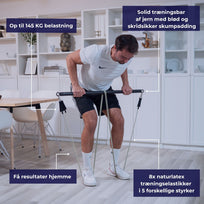
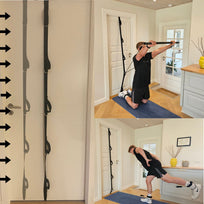
It requires load. And load can be created in many ways, including with band training, which allows you to adjust resistance continuously and train the whole body without fixed equipment or much space.
This is one reason why resistance bands have become an obvious solution for many who want to strength train at home. They take up no space, can be taken anywhere and provide resistance that can actually challenge the body.
For many, it is precisely the accessibility that makes home workout what actually happens. And it doesn’t have to compromise quality if the resistance is high enough and the training is structured. You can read more about what it takes in our article about building muscle without a gym.
With a setup like JAAFIT PRO hjemmetræningssæt you can work with adjustable resistance and adapt the load as you get stronger.
What actually drives your development
The strength training itself initiates the process. But it is not the strength in single exercises that determines your long-term progress.
It is whether you understand what the body actually responds to. When it makes sense to increase the load. What progression means in practice. And what happens in the body when you load it correctly over time.
If you want a concrete review of the principles that drive muscle building, you can read our article on how you build muscle mass.
Strength training makes sense in everyday life
For most people, strength training is not an end in itself. It is a means.
A means to have a body that functions better, endures more and is easier to use in your daily activities. And it doesn’t have to take a long time, require special equipment or take place in a gym to deliver that effect.
It just needs to happen. And to happen regularly enough that the body has a reason to adapt.
If you want to read more about training and find concrete approaches, you can explore more articles in our blog universe.



Leave a comment
This site is protected by hCaptcha and the hCaptcha Privacy Policy and Terms of Service apply.